What makes an Affordable SLS 3D Printer attractive to engineering consultancies?
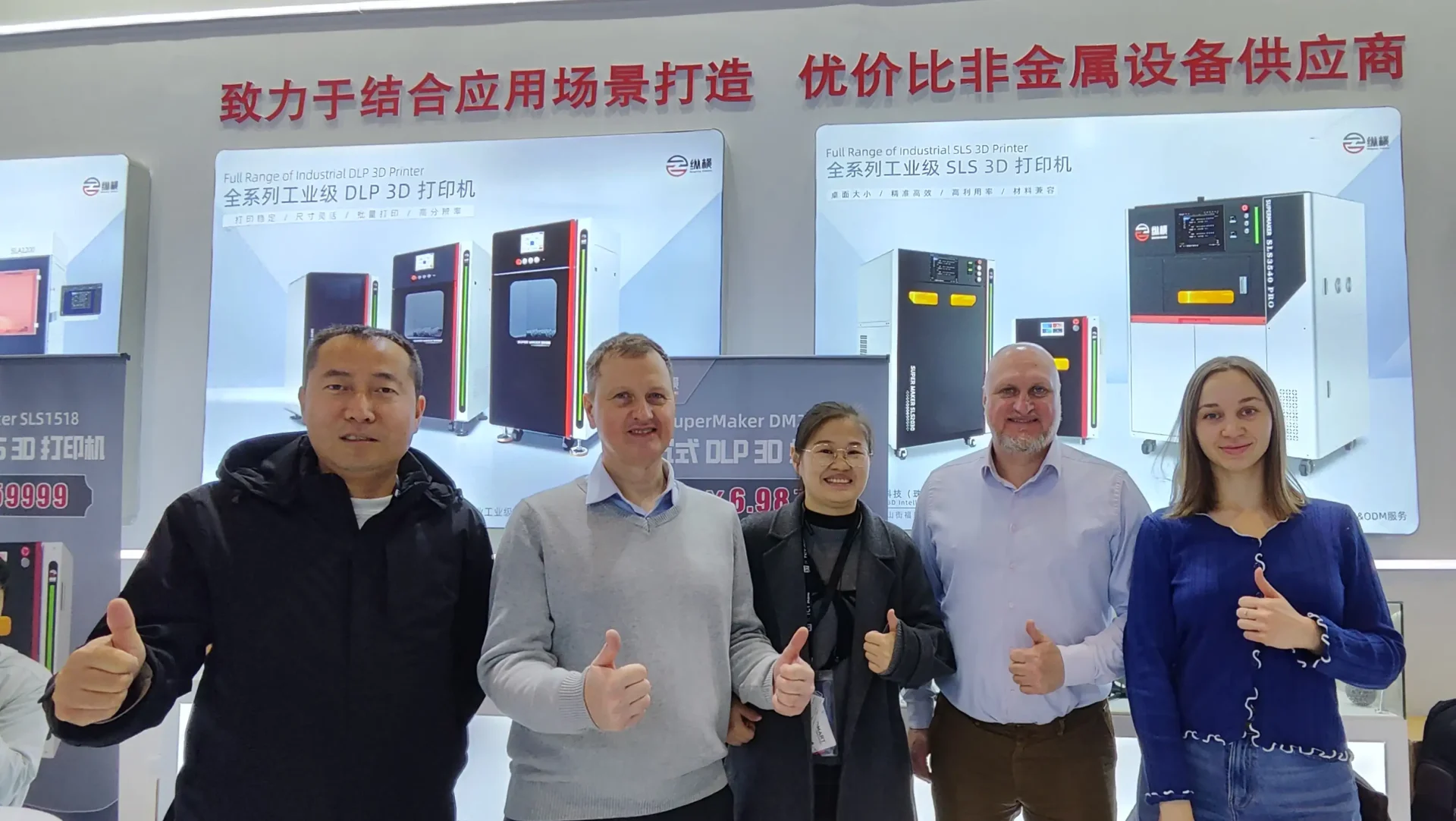
Opening such comprehensive examination concerning Pick-and-choose Luminescent Joining (Optical Fusion Technique) solution through cutting-edge layering production domains.
Deliberate Radiative Linking Laser Beam Consolidation presents a strong additive assembling framework engineered for generating intricate geometric elements. The referred overview studies closely into the primary fundamentals of SLS, presenting everything from the ingredients utilized—typically plastomeric like nylon—to the tools procedure and diverse functions. Knowing the finer points of SLS empowers designers to harness its optimum potential for prompt experimentation and limited-run assembly. We besides address general issues and progressive movements in this innovative arena.
Cost-effective SLS 3D Equipment: Bringing Bed Layer Fusion Attainable Originally a field closed to significant establishments, Selective Laser Sintering (SLS) 3D printing is continuously accessible to a more extensive audience owing to the advent of budget-friendly SLS equipment. These recent devices maximize savings the common barrier to involvement, enabling smaller facilities and explorers to utilize the upsides of powder bed fusion approach, including the fabrication of sophisticated parts with extraordinary mechanical characteristics. This change marks a revolution in incremental manufacturing arena.Luminescence Bonding 3D Devices: Technique and Practices
Light Fusing Solid Instruments operate the controlled radiant towards consolidate granular compounds, typically elastomers, film by stage, producing complex 3D components. The aforementioned approach, labelled as Chosen-for Luminous Sintering (Selective Laser Sintering), provides important perks for fabricating operational mock-ups and ultimate elements across numerous markets, featuring aeronautics, transportation, biomedical, and consumer assets. Moreover, SLS permits the construction of geometrically convoluted designs that would be arduous to build using old-fashioned systems.Joining 3D Systems: Advantages and Materials Defined
Joining units offer any exclusive technique to layered building. Different from typical 3D methods, fusing does not require structural bases for overhanging features. The mentioned brings about improved structural independence. Gains comprise superior matter traits and diminished final activities.
- Usually resources involve corrosion-resistant steel, advanced alloys, reactive alloys, copper alloys, and several hard brittle granules.
- The highlighted process employs that beam or beam of electrons particle stream to exclusively combine granular compound level by stage.
This Increase of Tabletop SLS 3D Apparatus
This area of 3D constructing is seeing a remarkable change with the rollout of desktop Selective Laser Sintering (SLS) machines. Traditionally a process reserved for high-volume setups, SLS enables the generation of advanced parts straight from polymer powder, dispensing with the requirement of backing bases. This revolution, once extremely lavish, is maturing increasingly available to tinkerers, micro companies, and educational bodies. These smaller, more low-cost apparatus offer a change in prototype design and batch development, unlocking innovative opportunities for planning and building across inclusive markets.
- Pros of Desktop SLS:
- Intricate Part Fabrication
- Missing Support Bases
- Component Freedom
Measuring Selective Laser Sintering 3D Device Variants and Fees
Appointing the correct laser sintering 3D machine can be daunting, especially when assessing the current models and their connected charges. Starter generations regularly move between $14,000 and $50,000, furnishing primary build extents and medium capacities. Medium-level apparatus commonly command between $55,000 and $90,000, offering a enhanced combination of functionality and capabilities. Finally, enterprise-grade surface layer consolidation equipment can transcend $140,000, offering expansive build spaces, advanced raw material varieties, and enhanced output. Hence, intensive scrutiny and analyses are essential before making a purchase.
Beam Fusion Process vs. Other Spatial Production Processes: Identifying is Appropriate for You Needs?
Appointing the right Dimensional creation technique can be difficult, especially when analyzing Photon Powder Fusion. While Filament Based Modeling yields minimal complexity stereolithography printer and low price, SLS presents unmatched scope in substance selection and elaborate element drafting. Unlike Stereolithography, which leads in creating fine trial versions, SLS allows the development of operational final elements with superb functional properties.
- Photon Powder Fusion is preferable for refined layouts.
- Material Extrusion is predominantly cost-effective.
- Light Curing generates exceptionally even outer coatings.
Progressive Materials for Laser Sintering 3D Printing
The quick emergence of laser sintering, a form of 3D printing, has emerged as activated by the building range of modern materials. At one time, limited to resins such as compounds, the sphere now adopts a comprehensive group of oxides, metallic substances, and even engineered mixtures of ingredients. Investigation endeavors are targeted at optimizing compound standards, such as mechanical durability, calorific durability, and energetic propagation, with the goal of make possible the manufacture of complex parts designed for demanding uses like aerospace, therapeutic, and car engineering. Besides, steady inquiries into nano particles and their implantation together with existing laser sintering elements present notable progress in effectiveness.
Imminent Patterns in Sintering 3D Printer Advancements
This impending path of sintering three-dimensional machine {development|progress|evolution|advancement|im