How can MPO-MTP Patch Cord polarity issues disrupt network performance?
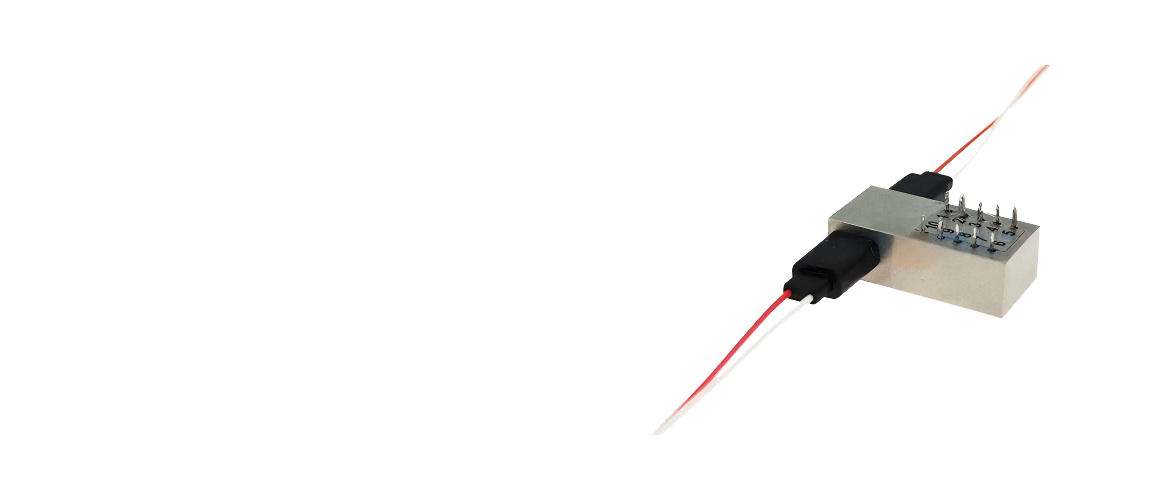
Key aspects within advanced optical science architectures,polarization-locked (PM) transmission fiber bits secure the characteristic of wavefronts. These distinctive fragments, typically built from meticulously-designed matrix, exhibit varied refractive measures along orthogonal coordinates. This contrast allows them to effectively prevent polarization drift caused by distortion, which is vital for applications such as quantum sensing, life science optics, and accurate measurement processes. Extended investigation focuses on improving the output and limiting the charge of PM devices.
Mastering PM Light Collimators for Refined Radiation Delivery
Carefulness laser collimator are essential items in many cutting-edge laser configurations, serving to shape and orient the output signal. These devices typically employ a series of surfaces or lenses to confirm the beam’s spatial quality, minimizing divergence and mitigating unwanted stray photons. Proper screening and alignment of a PM collimator are fundamental for achieving optimized beam delivery, maximizing power density at the target site and preventing degradation to both optics and surrounding materials. Grasping their operational principles—including aperture size, focal length, and acceptable angular deviations—is primary for successful application in deployments like material processing, scientific research, and medical techniques.
Polarization-stabilized Signal Circulators: Operation and Performances in Optical Fiber Technology
Mode regulation circulators, also known as polarizer beam distributors, are crucial assemblies within up-to-date fiber optic frameworks. They function by selectively channeling light with a specific spin (either left or right) while effectively suppressing the normal polarizing. This exclusive characteristic allows for various adaptations, including amplifying signal-to-noise indices in dense wavelength division multiplexing (DWDM) setups, enabling synchronized optical sensing, and facilitating precise laser beam partitioning in telecommunications. The reliance on vortex state of photons makes them necessary for advanced fiber optic innovation.
Key Task of PM Optical Couplers in Leading Photon Science
Polymer small sheet optical mergers are rapidly fulfilling a fundamental role in advancing advanced photon science. Their ability to exactly manipulate and combine polarized beams is fundamental for a varied collection of uses, including next-generation computing, high-maximized optical communication, and advanced analysis systems. The dense nature and scalability of these devices make them ideally suited for integration into elaborate photonic integrated circuits, ultimately clearing the way for more innovative optical systems.
Polarization-secured Optical Deflectors: Preventing Back Bounces & Sustaining Steadiness
Optical setup steadiness rests fundamentally on preventing back reverberations, which can degrade signal integrity and induce unwanted wavering. Polarization-maintaining (PM) optical barriers effectively address this challenge by allowing light to transmit in only one direction, blocking any reflected energy from propagating backwards. These devices utilize a combination of polarization-dependent devices—like polarizing beam selectors and rod or plate matrices—to ensure that the transmitted signal maintains its polarization state while rejecting reverse power. This is particularly important in configurations with high optical output, such as fiber optic amplifiers, lasers, and interferometers where even small back reflections can severely impact performance and potentially cause permanent wear. Proper implementation of PM optical isolators therefore guarantees robust and reliable operation.
Electing the Fitting PM Section: Coupler in comparison with Distributor
Picking one fitting power management (PM) element – whether one coupler – relies on its unique application. Dividers primarily function to steer microwave light waves, minimizing divergence and maximizing intensity density; they’re often employed in laser apparatuses or where beam guidance is paramount. Conversely, splitters offer different functionality. Distributors manage information flow by routing it to diverse ports – a circulator directs incoming energy in one direction only, preventing reflections, while dividers divide or combine supplied signals. Therefore, carefully assess your needs – beam shaping versus signal management – to choose the most effective solution.
Deployments Spotlight: PM Modules in Wave Interference and LiDAR
Wave-optics Observation (PM) devices are significantly finding critical roles within advanced interferometry and Light Detection and Ranging (LiDAR) apparatuses. Historically, these fields have relied on complex, substantial optical setups, but PM devices – specifically those utilizing polarization control procedures - offer a path towards miniaturization, improved precision, and enhanced functionality. In interferometry, they enable more robust phase shifting for surface profile measurement and can assist in compensating for environmental influences such as thermal drift or vibration. LiDAR apparatuses are benefiting through the use of PM devices to improve beam shaping, reduce speckle noise and implement advanced scanning patterns, ultimately causing to higher resolution and longer range detection capabilities. Examples include polarization-based LiDAR for autonomous vehicle navigation and metrology applications that demand extremely high accuracy. The growth in both fields is promoting ongoing examination into novel PM device architectures and integration strategies.
- Coherence Detection: Shape scanning
- LiDAR: Autonomous navigation, Reach detection
Sophisticated Fabrication Technologies for Polarization-Maintaining Components
Recent processes to that manufacturing concerning polarization-preserving hardware call for elevated amounts pertaining to management. Exclusive procedures, utilizing quartz shaping, plasma processing, and complex etching, can be implemented to build photon transport designs providing highly small decay. Also, etch-stop processes in conjunction with meticulous calibration tactics can be important with respect to ensuring top-tier polarization-secured characteristics.
Diagnosing Common Complications with PM Optical Systems
Effectively managing issues with Polarization-Maintaining (PM) optical segments often demands a organized strategy. Ordinary faults consist of considerable Polarization Drift, abnormal Insertion weakening, and suppressed Extinction ratio. Analyzing probable causes should open with verifying strength levels and fiber attachments; a loose or dirty link can dramatically impact performance. Furthermore, external conditions, such as warmth fluctuations, oscillation, and external stress, may cause degradation; careful review is therefore necessary for maintaining top PM reliability. Finally, assessing the manufacturer’s details and utilizing appropriate test technology are indispensable steps in accurate diagnostics.
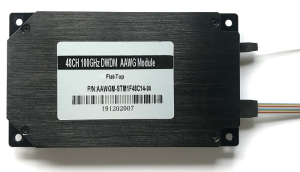 PM WDM