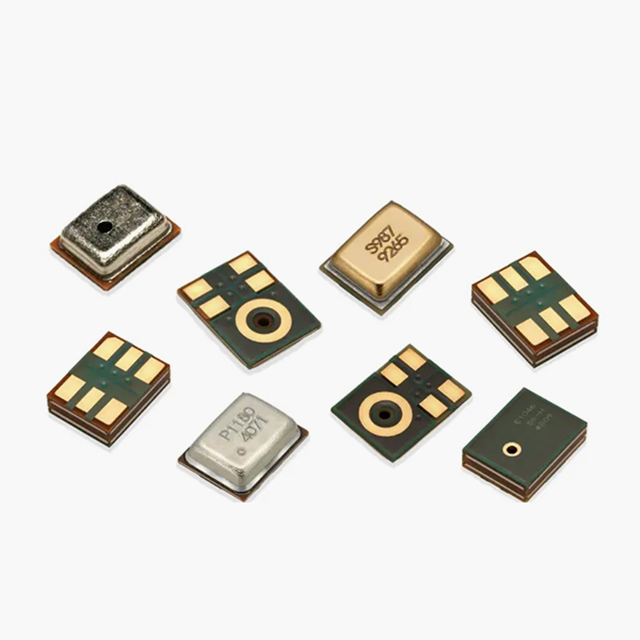
authority building microphone array beamforming starter kits for integrators?
b
Recent urge of high-quality auditory sensations in devices such as mobile phones portable instruments Internet of Things gadgets plus calling audio interaction systems hasdriven substantial developments inside microphone design. micromechanical devices microphone formations feature a particularly motivating solution, facilitating for strong audio recording even in noisy environments. These advanced systems employ a number of MEMS microphones, strategically distributed coupled with electronic algorithms to apply beamforming, noise suppression, and echo cancellation. Further, they upgrade the noise ratio ratio, leading to a pronounced enhancement in overall audio excellence and a heightened user satisfaction.
Elevated SNR MEMS Microphones Array Configurations: Layout and Efficiency
A progressing discipline of advanced audio examination increasingly hinges on compact and highly precise acoustic sensing platforms. Recent enhancements have focused on incorporating MEMS microphone array array sets that exhibit exceptionally high noise ratio ratios. This architecture involves meticulous fine-tuning of both the discrete microphone characteristics—including covering composition, substrate fabrication, and covering techniques—as well as the array form itself. The functionality is crucially conditioned by factors such as environmental noise lowering, audio steering, and echo reduction. Further scrutiny into dynamic formulas and adjustment protocols is essential to fully reach the potential of these innovative acoustic methods for deployments ranging from vocal cooperation to ambient inspection.
Expandable MEMS Microphone Clusters for Innovative Audio Management
Increasing growing request for progressive audio systems, ranging from involving virtual reality to consistent voice guidance in noisy scenarios, is driving significant innovation in microphone design. Scalable MEMS (Micro-Electro-Mechanical Systems) microphone formations offer a particularly noteworthy solution, providing improved positional sensitivity, noise dampening, and the ability to perform complex audio management algorithms in real-time. The scalability essential to MEMS fabrication allows for the creation of large, bendable microphone configurations that can be exquisitely tailored to specialized expectations. Future advancements will likely focus on merging these arrays with elaborate beamforming and source distinguishing techniques, leading to remarkably audio performance and enhanced functionality.
Aural Sensor Array Modules: Leveraging MEMS for Precision Directionality
Recent surging demand for localized audio event recognition is pushing innovation in audio sensor technology, particularly through the adoption of microengineering tech array modules. These modules assemble multiple MEMS receivers, strategically positioned to develop a precise focused sensitivity profile. The prowess to electronically steer the “listening” focus without physical repositioning unlocks important advantages for applications ranging from complex surveillance systems and mechanical navigation to engaging augmented reality experiences and notably sensitive biotic monitoring. In addition, elaborate signal management tactics, often involving beamforming algorithms, optimize the fidelity and strength of the directionality, even in the presence of proximal noise or harsh acoustic environments. A crucial gain lies in the miniature form factor and lessened power expenditure characteristic of MEMS-based solutions, allowing their broad deployment across a diverse set of portable and embedded apparatuses.
MEMS Microphone Array Optimization for Noise Reduction and Clarity
Obtaining remarkable acoustic standard in demanding settings frequently necessitates thorough optimization of MEMS detector configurations. A sophisticated process involves sensitively refining beamforming settings to thoroughly limit proximal disturbance. This can include utilizing sophisticated procedures like self-learning component dissection (ICA) or spectral removal for robust effectiveness. Furthermore, considering arrangement positions between individual components within the configuration is vital for maximizing the clarity ratio measure and aggregate listening purity. Such optimization can remarkably augment the utility of devices in cases spanning from conferencing to handheld devices.
Ultra-High-SNR MEMS Microphone Sets: Uses and Positive Aspects
Current innovations in micro-electromechanical systems (MEMS) technology have contributed to the creation of ultra-high-signal-to-noise-ratio microphone arrays, heralding in a new era for acoustic detection across a large range of applications. These sophisticated platforms dramatically raise the clarity and fidelity of captured audio, making them invaluable in scenarios demanding superior noise cancellation. Consider, for referent, their utility in far-field speech understanding for smart home devices – the ability to accurately handle commands even amidst background sounds is significantly maximized. Beyond consumer electronics, applications stretch to industrial supervision, where precise acoustic data is crucial for forecasting maintenance of machinery, and in medical hospitals for highly sensitive diagnostic processes. Furthermore, these arrays are proving key in the innovation of advanced noise-canceling headphones and involving audio experiences, fundamentally shaping how we interact with sound.
MEMS microphoneMinute MEMS Microphones Configurations for Embedded Acoustic Environments
A flourishing craving for sophisticated sound processing capabilities in travel-friendly devices has spurred significant progress in sound detection technology. Specifically, compact MEMS microphones configuration elements are increasingly utilized for incorporated aural environments. These components offer a noteworthy combination of prime performance, curtailed power consumption, and diminutive form factors, empowering their faultless combining into a broad range of implementations, from mobile machines to Connected of Things links. The ability to record various aural signals coordinated also enhances consistent noise reduction and spatial processes, further elevating the overall client satisfaction.
Beamforming with MEMS Microphone Clusters
Recent integration of Micro-Electro-Mechanical Systems Microsystems microphone clusters is revolutionizing audio processing in a wide range of applications, from smart speakers to noise-canceling headsets and conference platforms. A key facilitating technology in this space is beamforming, which allows for the directional focus of audio pickup, effectively isolating desired sound sources while rejecting unwanted noise and reverberation. Several beamforming methods are commonly employed, including Delay-and-Sum (DAS), Minimum Variance Distortionless Response (MVDR), and Generalized Sidelobe Canceller (GSC). DAS is relatively straightforward to implement but may exhibit noticeable sidelobe levels. MVDR offers superior noise suppression by adaptively shaping the beam pattern, but its execution requires knowledge of the noise covariance grid. GSC provides a compromise between complexity and performance, often used in real-time systems. Practical implementation involves careful consideration of microphone placement, calibration actions to compensate for manufacturing irregularities, and efficient formulas for determination to meet real-time boundaries. The mounting power and decreasing charge of embedded microcontrollers further encourage the widespread adoption of beamforming with MEMS microphone arrays.
MEMS Microphone Array Calibration and Signal Processing Strategies
True capability in MEMS pickup array systems critically depends on meticulous standardization and sophisticated audio manipulation techniques. Initial calibration often involves compensating for inherent manufacture variations among individual units, which can manifest as differences in sensitivity, interval, and noise elements. Advanced procedures, such as lowest squares or iterative optimization, are frequently employed to refine these settings. Subsequently, signal processing steps—including spatial filtering, noise minimization, and echo mitigation—are indispensable for isolating the aimed audio and improving the overall resolution of the collected voice. Adaptive filtering which dynamically calibrate to varying sonic conditions are gaining importance for robust output in complex circumstances.
Incorporating Microstructures Microphones for Robust Audio Monitoring Arrays
This proliferation of automated devices has fueled a burgeoning need for advanced audio detection capabilities. Traditional microphone architectures often struggle with interruption and narrowed spatial awareness. A significant advancement in handling these challenges lies in the strategic implementation of Microstructures microphones within robust audio sensing arrays. These miniature, low-power devices, when aligned in a thoughtful array configuration, provide unparalleled elasticity in beamforming, source identification, and background external cancellation. The inherent volume of Micro-MEMS microphones allow for dense packing, creating sharply-defined acoustic maps. Furthermore, advanced techniques can be employed to counter collective style noise and enhance the overall SNR ratio, yielding remarkably solid audio performance even in adverse acoustic environments.
Advanced Audio Sensing: Utilizing MEMS Microphone Array Technology
Our rapid evolution of local sensing systems has driven significant improvement in audio capture techniques. A particularly attractive area is the deployment of MEMS unit array systems. These compact, low-power gadgets, fabricated using micro-electromechanical systems (MEMS), offer a outstanding advantage over traditional single sensor solutions, enabling sophisticated characteristics such as beamforming, noise filtering, and far-field sound recognition. By strategically situating multiple pickup elements within an array, directional characteristic can be precisely guided, effectively isolating desired audio signals from unwanted adjacent noise. This allows for improved quality in challenging circumstances, impacting applications ranging from smart home assistants and mobile devices to automotive structures and industrial handling. Further refinements are focusing on increased acoustic range, lower reaction time, and heightened signal-to-noise scales through advanced processing.
c